Ocean Compute Infrastructure

Scaling Compute to 10 Terawatts

Clean ocean energy and free cold-water cooling enable compute to grow far beyond land-based limits — with low PUE, deployment without regulatory delays, and environmental benefits including marine habitat, nutrient upwelling, and aeration of hypoxic waters.

Energy Clean Solar Thermal Power
Cooling Seawater Cooling · Ultra Low PUE
Structure UHPC · Airform · Scalable
Environment Habitat · Upwelling · Aeration
Platform Concept A — Tower

Two Engineering Paths, One Construction System

Both platform concepts are built with the same UHPC airform methodology — inflatable formwork, monolithic concrete shells, at-sea fabrication. The choice between tower and dome is a deployment decision driven by site depth, program requirements, and stability tradeoffs.

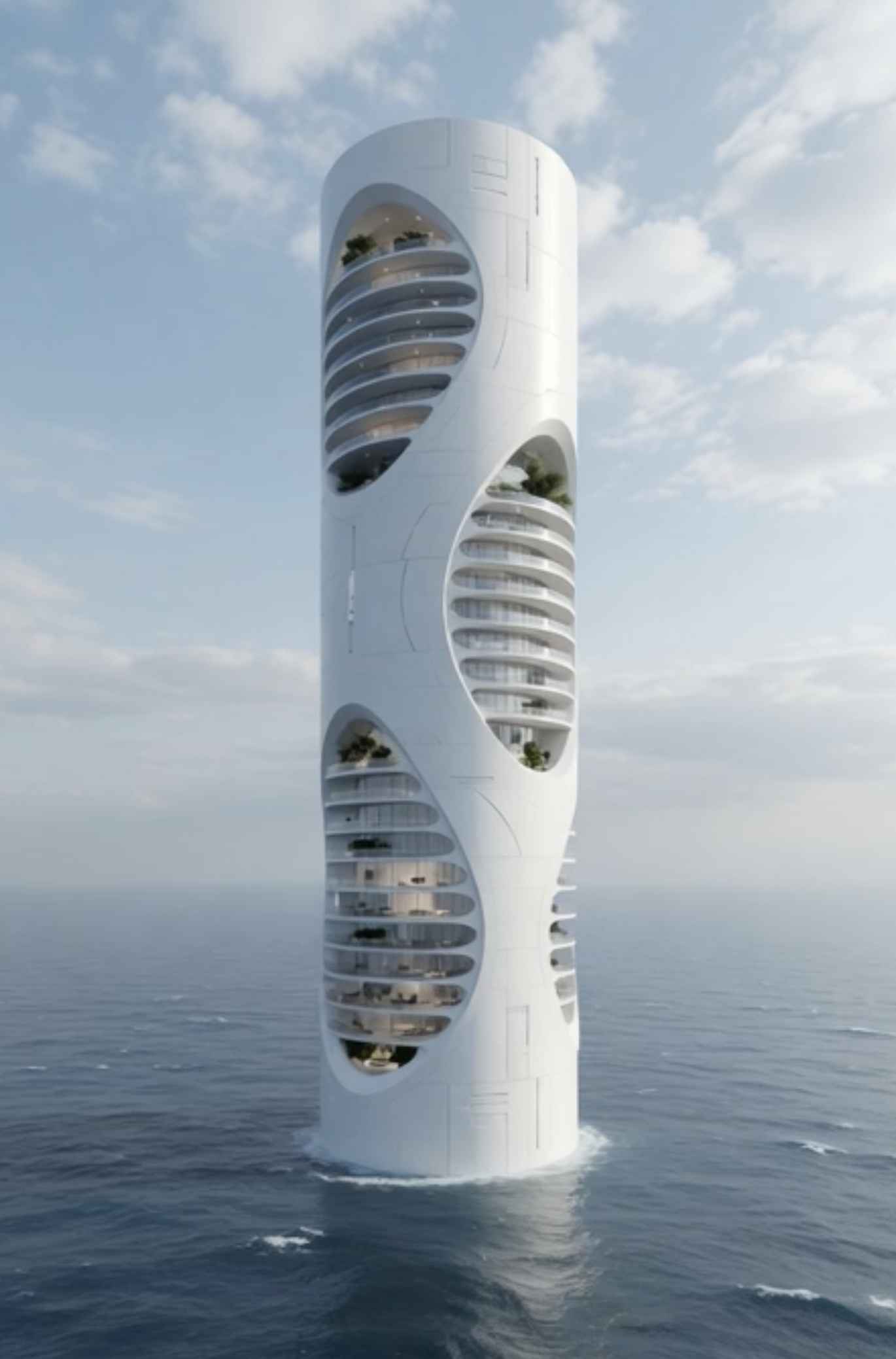
RB Sea tower platform concept — slender UHPC structure integrating deep-water cold pipe
Platform Concept A Tower Architecture
Concept A

Tower

A slender vertical structure with the deep-water cold pipe integrated through the structural core — optimized for OTEC deployment in deep tropical waters.

  • Integrates deep-water cold pipe along the structural core
  • Lower center of gravity — superior stability in open ocean
  • Minimal waterplane area reduces wave loading
  • Efficient vertical stacking for OTEC heat exchangers
  • Limited above-water deck area per footprint
  • Higher aspect ratio increases wind exposure aloft
Concept B

Dome

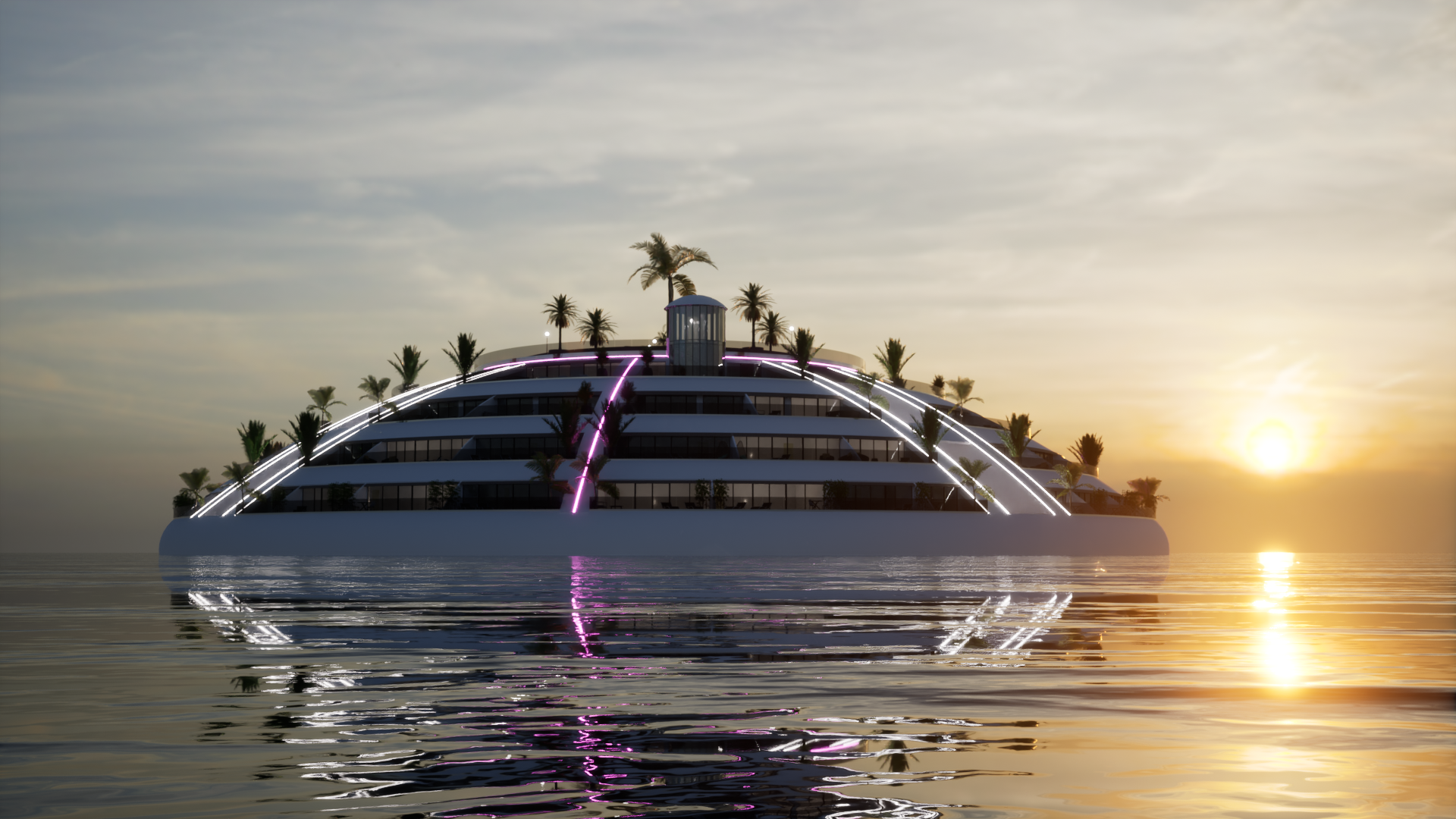
A wide monolithic shell with maximum above-water volume — optimized for habitation, compute floorplate, and mixed-use development at scale.

  • Maximum above-water area for habitation and tourism
  • Stability from wide diameter and heavy submerged base
  • Efficient floorplate for mixed-use development
  • Lower profile reduces wind loading at elevation
  • Cold-water pipe requires separate riser infrastructure
  • Larger waterplane limits location to equatorial and other hurricane-free regions
RB Sea dome platform concept — wide UHPC structure with heavy base at sunset
Platform Concept B Dome Architecture

Two Integrated Engineering Systems

RB Sea's platform architecture combines advanced concrete construction with ocean thermal energy conversion — enabling durable floating structures with continuous, low-cost power and industrial-grade cooling.

System 01

UHPC Airform Construction

At-Sea Monolithic Dome Fabrication

Ultra-High Performance Concrete (UHPC) deployed via airform inflation — the same principle Monolithic Domes uses for land-based megastructures, adapted for marine fabrication. Inflatable formwork enables rapid, repeatable construction of spherical and toroidal hull geometries without traditional shipyard infrastructure.

  • Compressive strength exceeding 150 MPa
  • Superior strength-to-weight vs. conventional concrete
  • Monolithic shells — no welded seams or fatigue points
  • Scalable from residential modules to industrial platforms
  • Fabrication possible at sea, reducing logistics costs
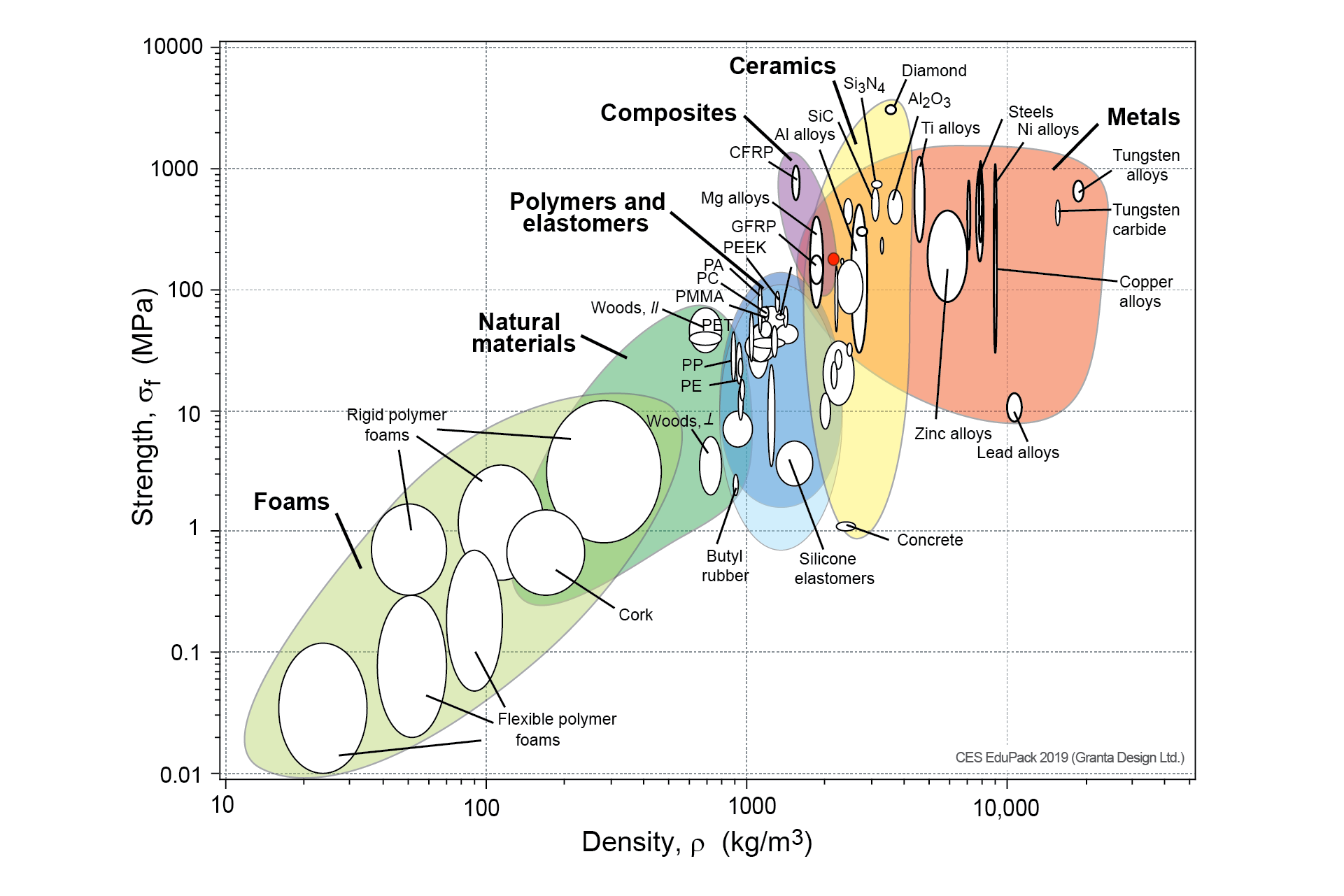
UHPC strength-density chart showing superior material properties
System 02

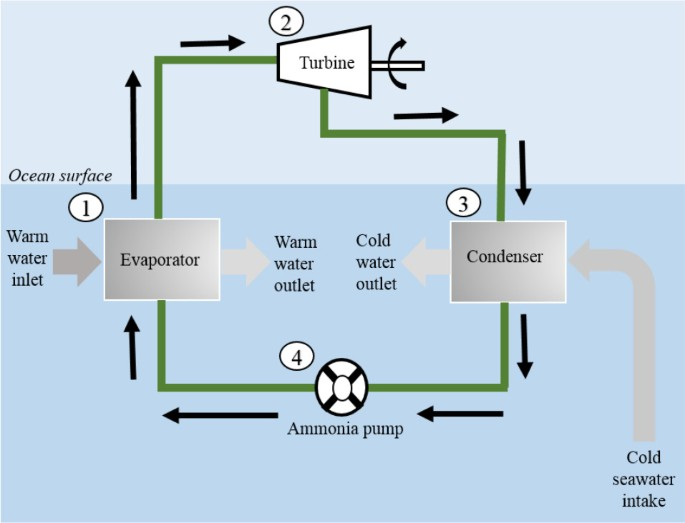
OTEC / ORC / SWAC Hybrid

Ocean Thermal Energy & Seawater Cooling

A tri-modal energy system leveraging the ocean's natural thermal stratification. Ocean Thermal Energy Conversion (OTEC) generates baseload power from the temperature differential between warm surface water and cold deep water. Organic Rankine Cycle (ORC) turbines capture waste heat. Seawater Air Conditioning (SWAC) provides industrial-grade cooling for compute workloads.

  • 24/7 baseload power independent of weather
  • Cold seawater cooling for high-density compute
  • Dual revenue: electricity generation + thermal services
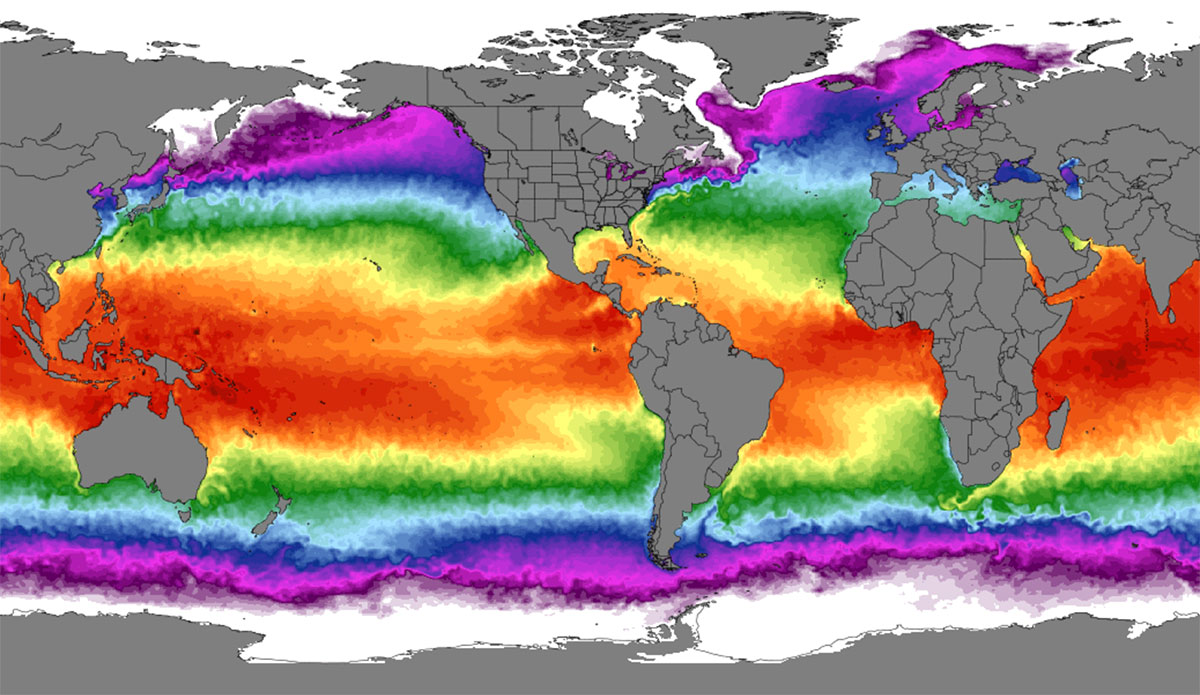
  • Optimal in tropical latitudes with deep ocean access
  • Near-zero marginal cost once infrastructure is deployed
OTEC system diagram showing warm and cold water flow

Ocean-Powered AI Infrastructure

Floating platforms with dedicated OTEC power and SWAC cooling create an ideal environment for high-density compute — with energy costs a fraction of land-based data centers and cooling essentially free.

Primary Focus

AI Compute & Inference

Training and inference workloads demand massive, reliable power and continuous cooling. Ocean thermal systems deliver both at scale. Offshore platforms provide physical security, jurisdictional flexibility, and expansion capacity that land-based facilities cannot match. The combination of cheap baseload power and free cold-water cooling creates a structural cost advantage for AI infrastructure operators.

Secondary Revenue

Proof-of-Work Compute

Bitcoin mining and other proof-of-work workloads serve as an ideal bootstrap revenue stream during platform deployment. Mining operations monetize excess power capacity immediately, generating cash flow while AI tenant infrastructure is provisioned. Power cost is the primary determinant of mining profitability — OTEC delivers the lowest sustained energy cost of any generation method.

~20°C
Deep Water Temp
24/7
Baseload Power
PUE <1.1
Cooling Efficiency
Global ocean temperature map showing tropical thermal gradients

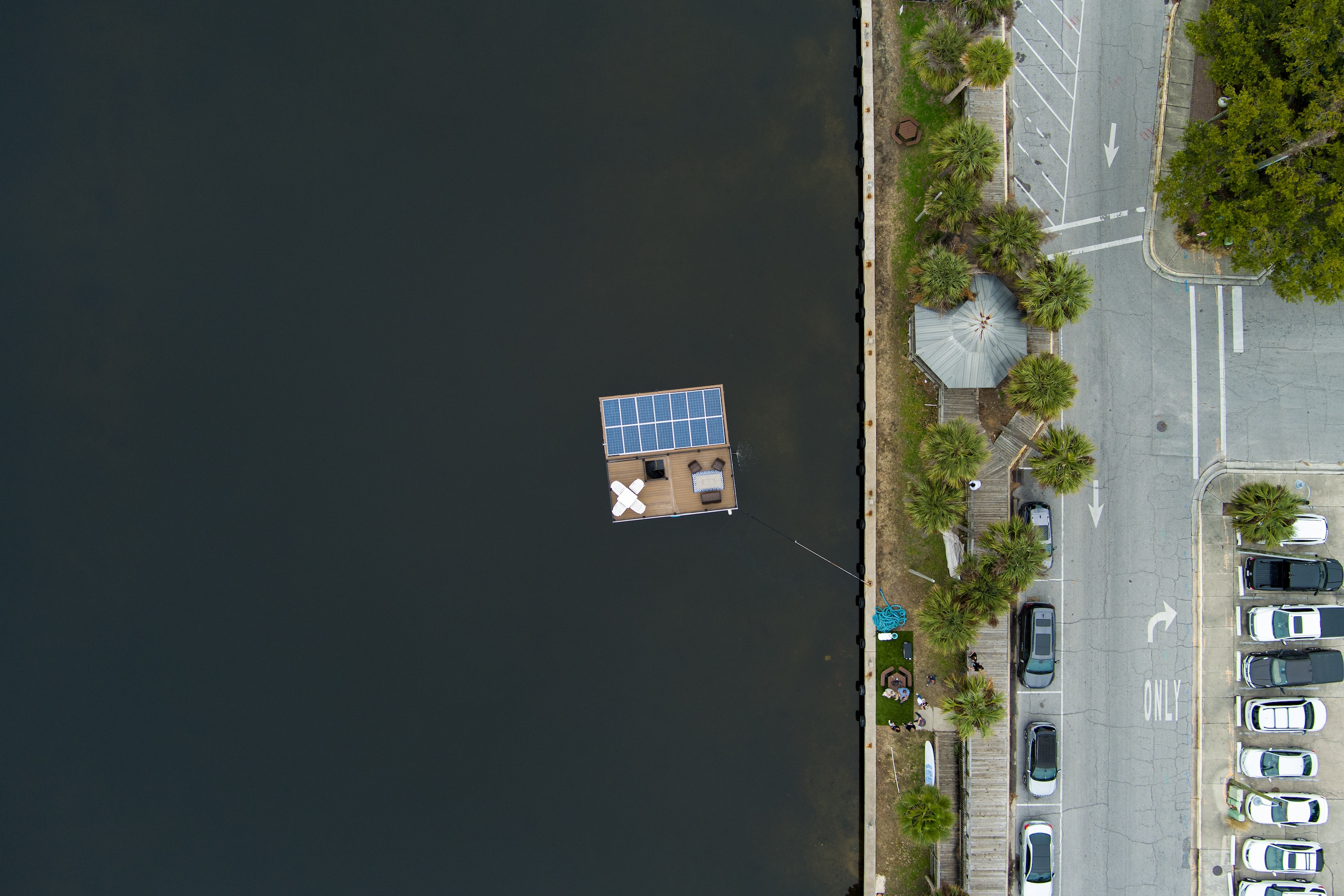
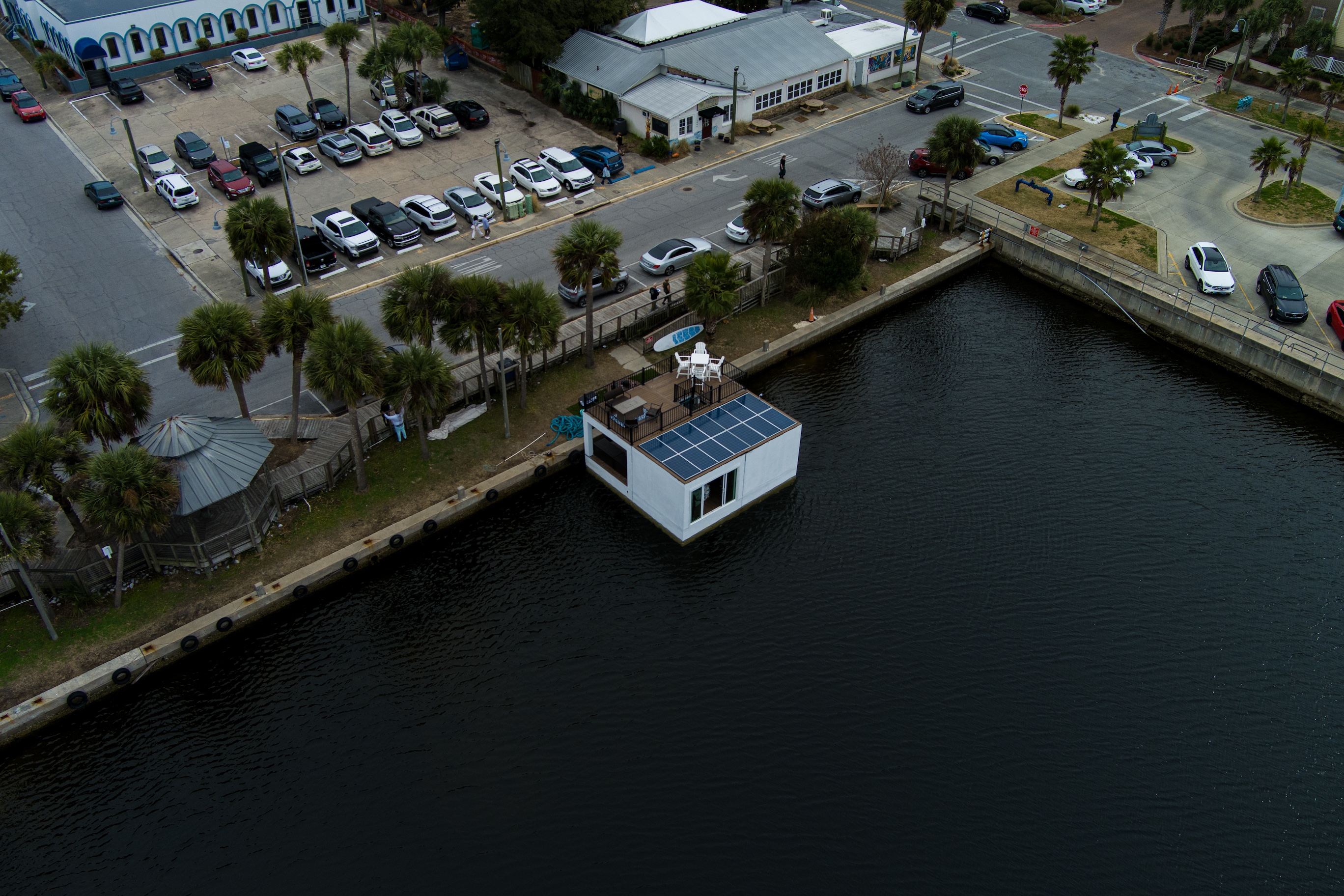
The Coquina Prototype

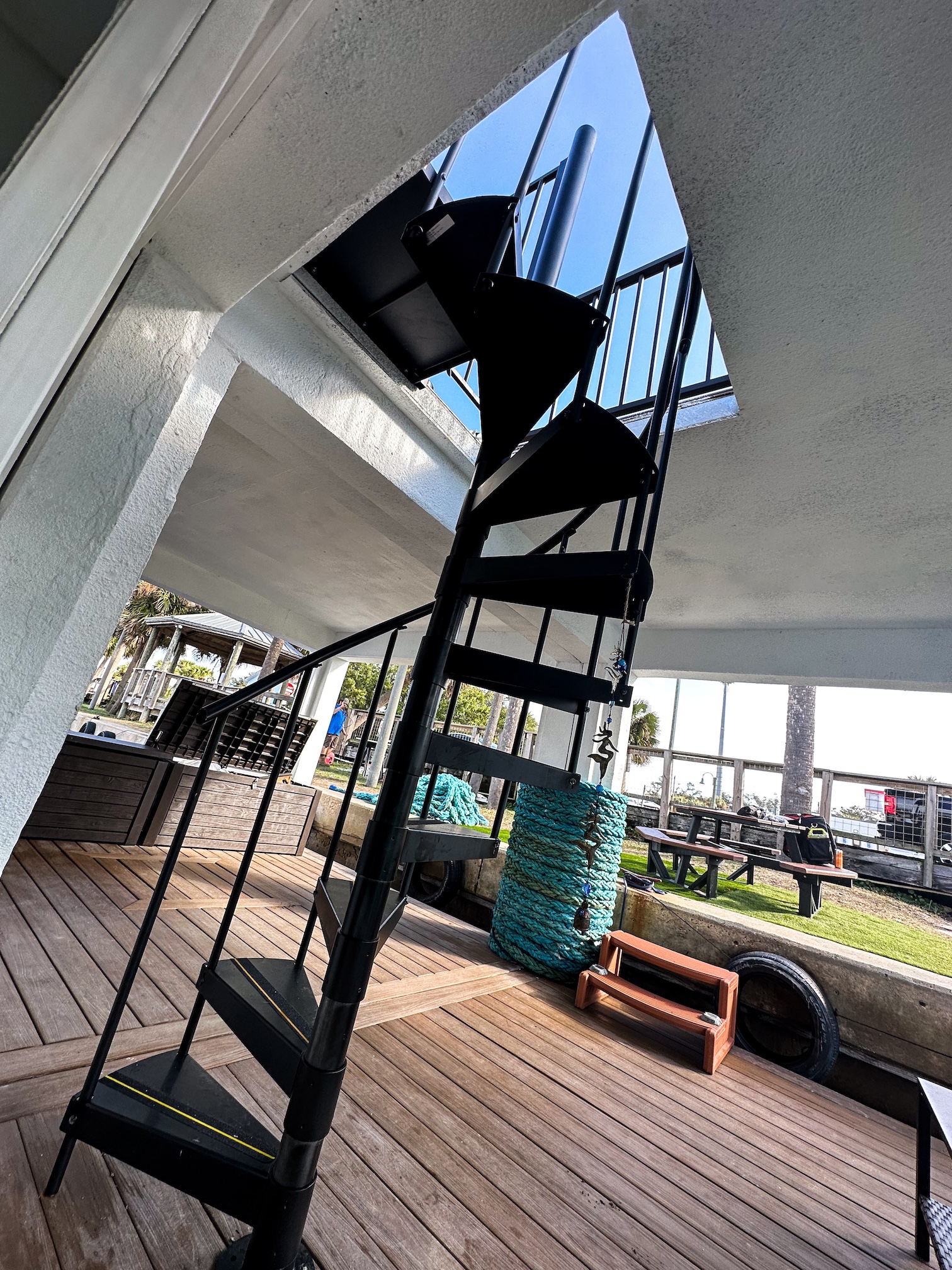
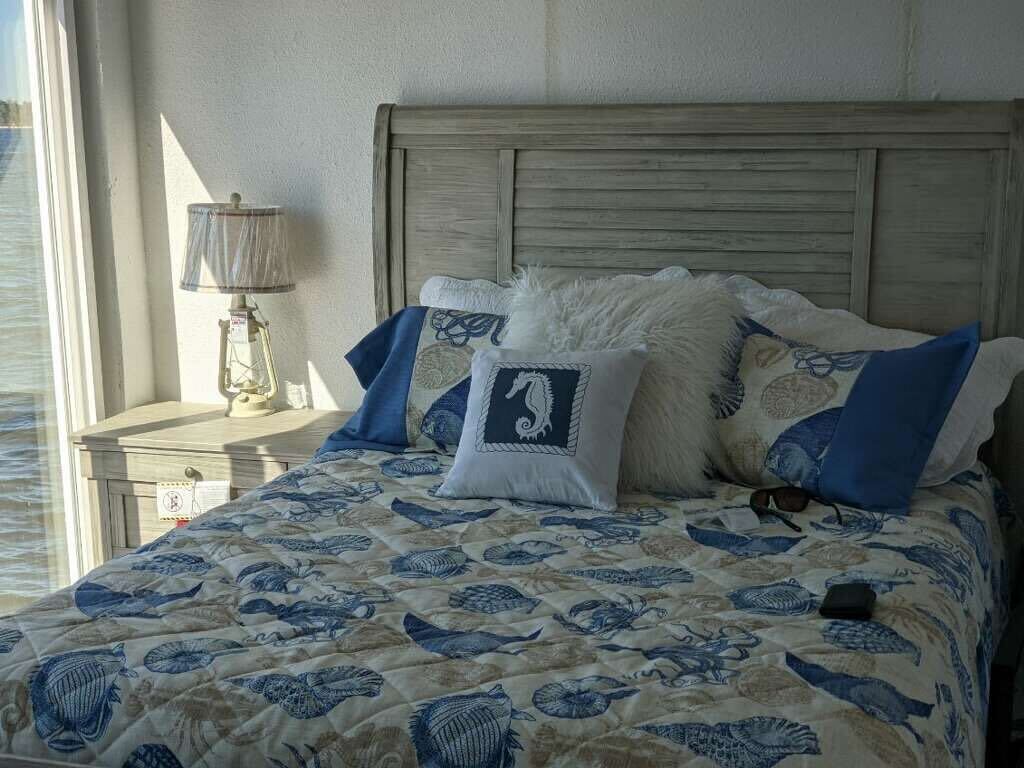
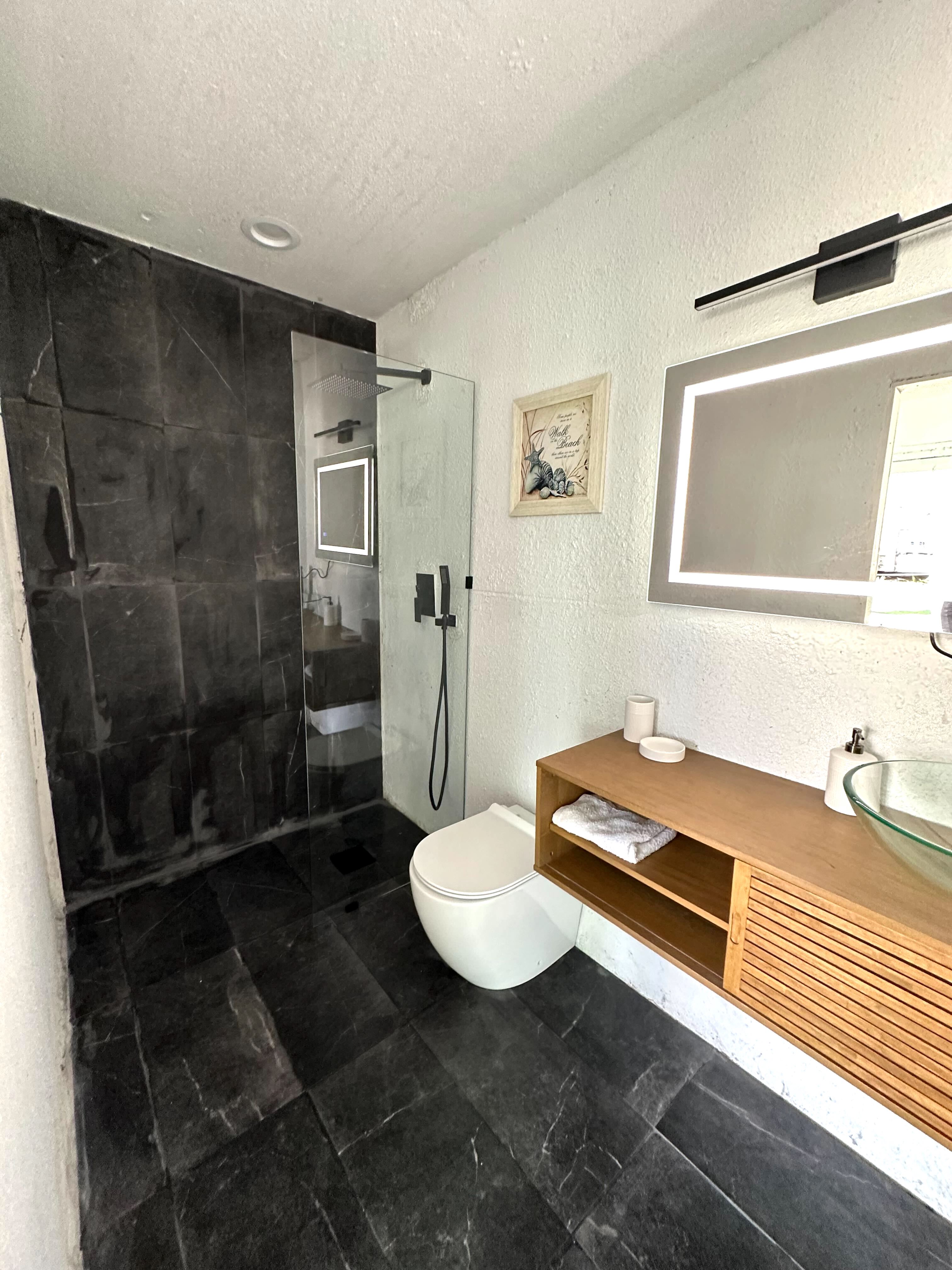
Before scaling to industrial platforms, we built and tested a full-scale modular floating home — validating materials, construction methods, and off-grid systems in real marine conditions.

What We Proved

The Coquina project demonstrated end-to-end capability: structural engineering, modular fabrication, marine deployment, and sustained off-grid operation. The platform was designed, built, and lived in — providing real-world data on buoyancy, stability, thermal performance, and systems integration.

Engineering Milestones

  • Full-scale modular hull fabrication and float testing
  • UHPC and composite materials characterization
  • Off-grid power, water, and waste systems integration
  • Marine deployment and mooring in active waterways
  • Occupied testing with continuous systems monitoring
  • Structural performance data under wave loading

Phased Investment & Deployment

RB Sea follows a disciplined scaling strategy — proving technology at each phase before committing capital to the next order of magnitude. Small-scale deployments are not expected to be efficient or commercially useful on their own.

Phase I — Current

Proof of Concept

$5M

Validate core technology at sea — at-sea UHPC airform construction, deep-water piping, and integrated energy/cooling systems that reduce structural and operational costs at scale. Not revenue-generating; the objective is technical proof. El Salvador is an option, but a $5M test in international waters works if needed.

  • At-sea UHPC airform construction demonstration
  • Deep-water cold pipe and OTEC/SWAC system integration
  • Validated cost models for structure, energy, and cooling
  • Technology readiness for Phase II scale-up
Phase II — Scale

Full-Scale Structure

$300M

Build a full-scale monolithic floating structure — the primary goal of this phase. Power generation is included but not at full gigawatt scale; generation capacity is the more expensive component and ramps in Phase III. Validate construction, deployment, and operations at production size.

  • Full-scale monolithic floating platform
  • Pilot-scale OTEC/SWAC integration (not full power gen)
  • At-sea airform construction at production scale
  • Operational validation for Phase III scale-up
Phase III

Gigawatt Scale

$1B+

City-scale floating developments combining compute, energy, logistics, and habitation. Permanent ocean infrastructure serving as industrial hubs, launch platforms, and population centers — enabled by decades of materials and systems engineering.

  • Gigawatt ocean thermal power generation
  • Gigawatt-scale AI compute campuses
  • Integrated logistics and habitation modules
  • Multi-use ocean industrial zones

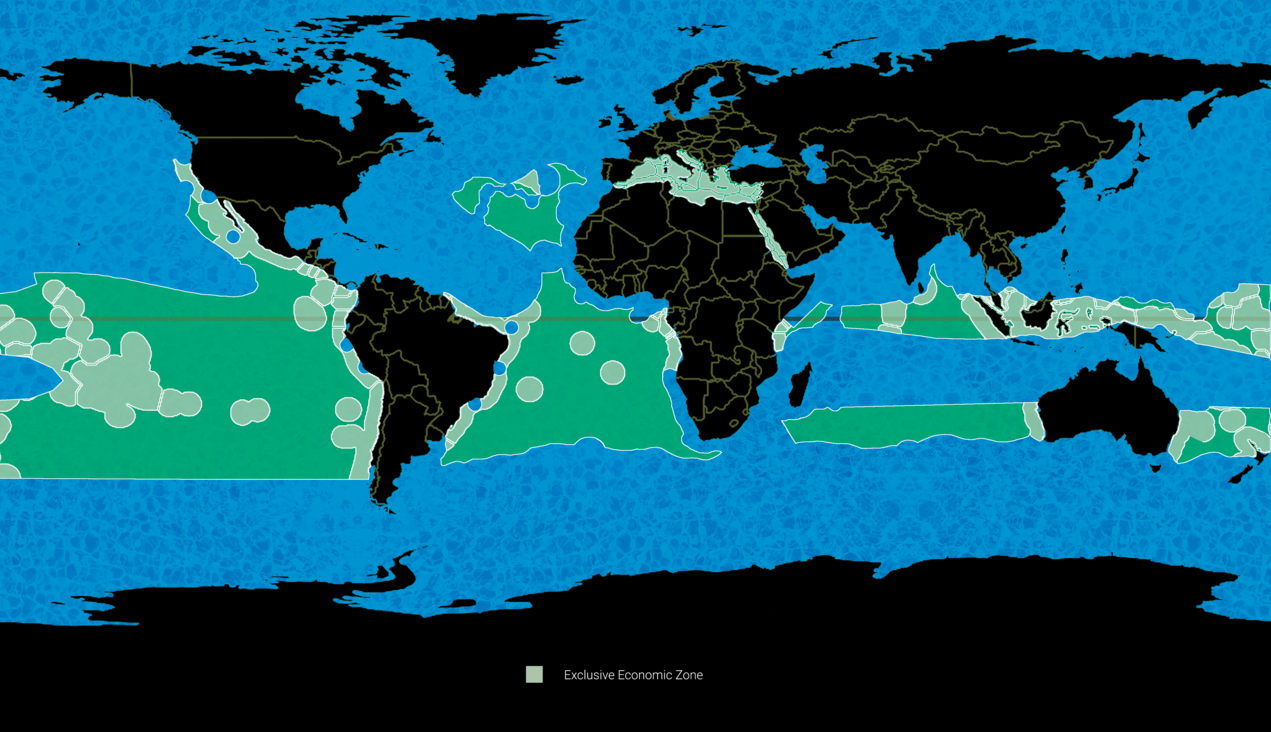
Central American Pacific — Optimal Conditions for First Deployment

Tropical Pacific waters off Central America offer the ideal combination of warm surface temperatures, accessible cold deep water, favorable regulatory environments, and proximity to major fiber routes. El Salvador's progressive digital asset policies and active infrastructure investment create a compelling jurisdiction for a first commercial deployment.

Strategic partnerships with established financial institutions in the digital asset space provide a credible funding pathway — aligning capital deployment with sovereign-level commitment to technology infrastructure development.

Tropical OTEC Zone Deep Ocean Access Digital Asset Jurisdiction Submarine Fiber Proximity Sovereign Partnership Path
Map of optimal OTEC deployment locations globally

From Platforms to Ocean Cities

The modular construction and energy systems we are engineering today scale to support floating industrial complexes, launch infrastructure, and permanent ocean settlements.

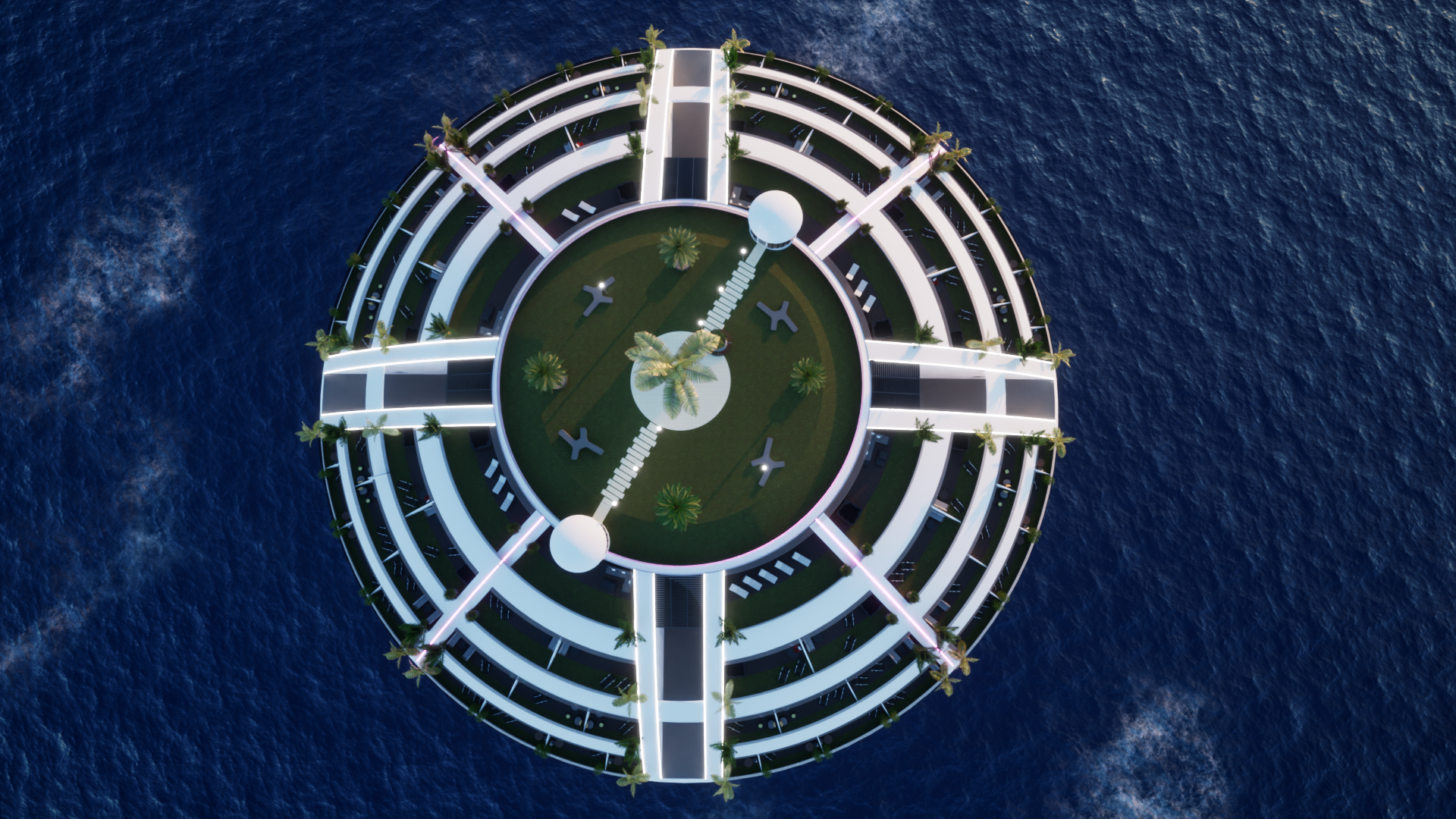
Concept rendering of large-scale circular floating platform

Modular Platform Complex

Multi-ring floating development

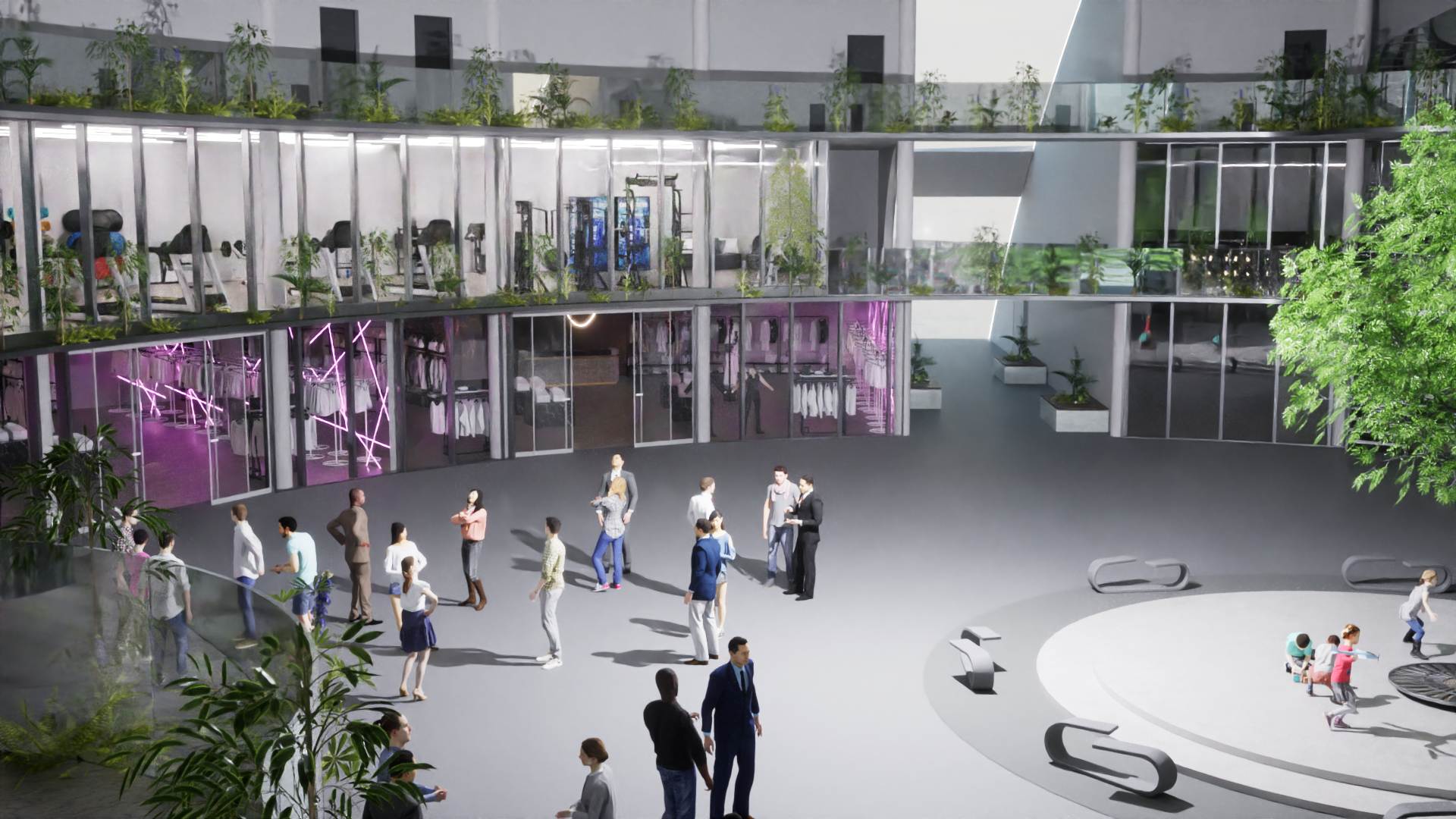
Concept interior of floating structure atrium

Integrated Habitation

Mixed-use ocean architecture

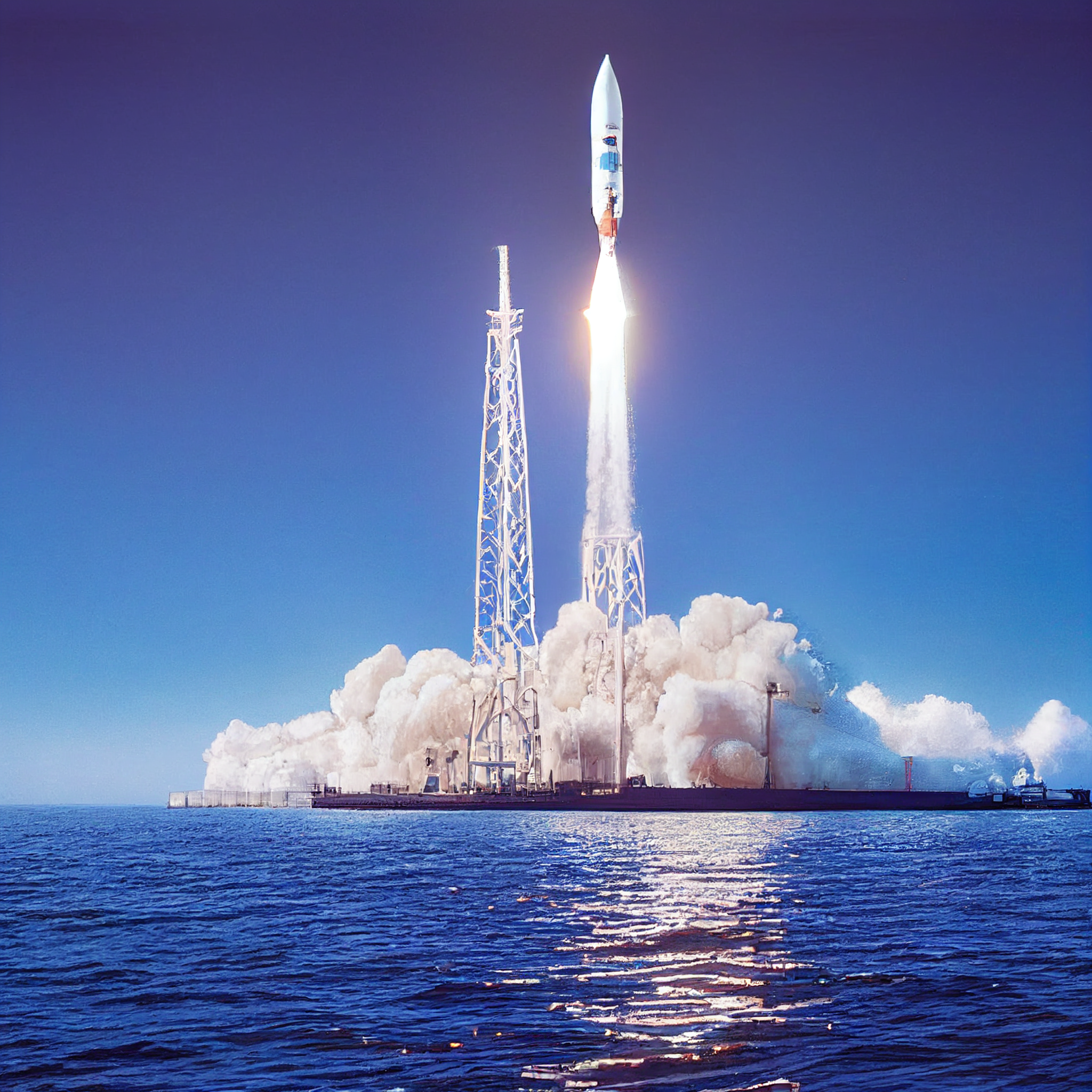
Floating ocean launch platform concept

Industrial Infrastructure

Launch platforms & heavy industry

The ocean is the largest undeveloped real estate on Earth. RB Sea is building the engineering foundation to develop it — one module, one platform, one power plant at a time.

Build With Us

RB Sea is actively seeking engineering partners, strategic investors, and institutional collaborators for Phase I deployment. Whether you bring capital, construction capability, compute demand, or jurisdictional access — we want to hear from you.

WEB
rbsea.com